After the Headlines: Lawsuits in the Wake of Disaster
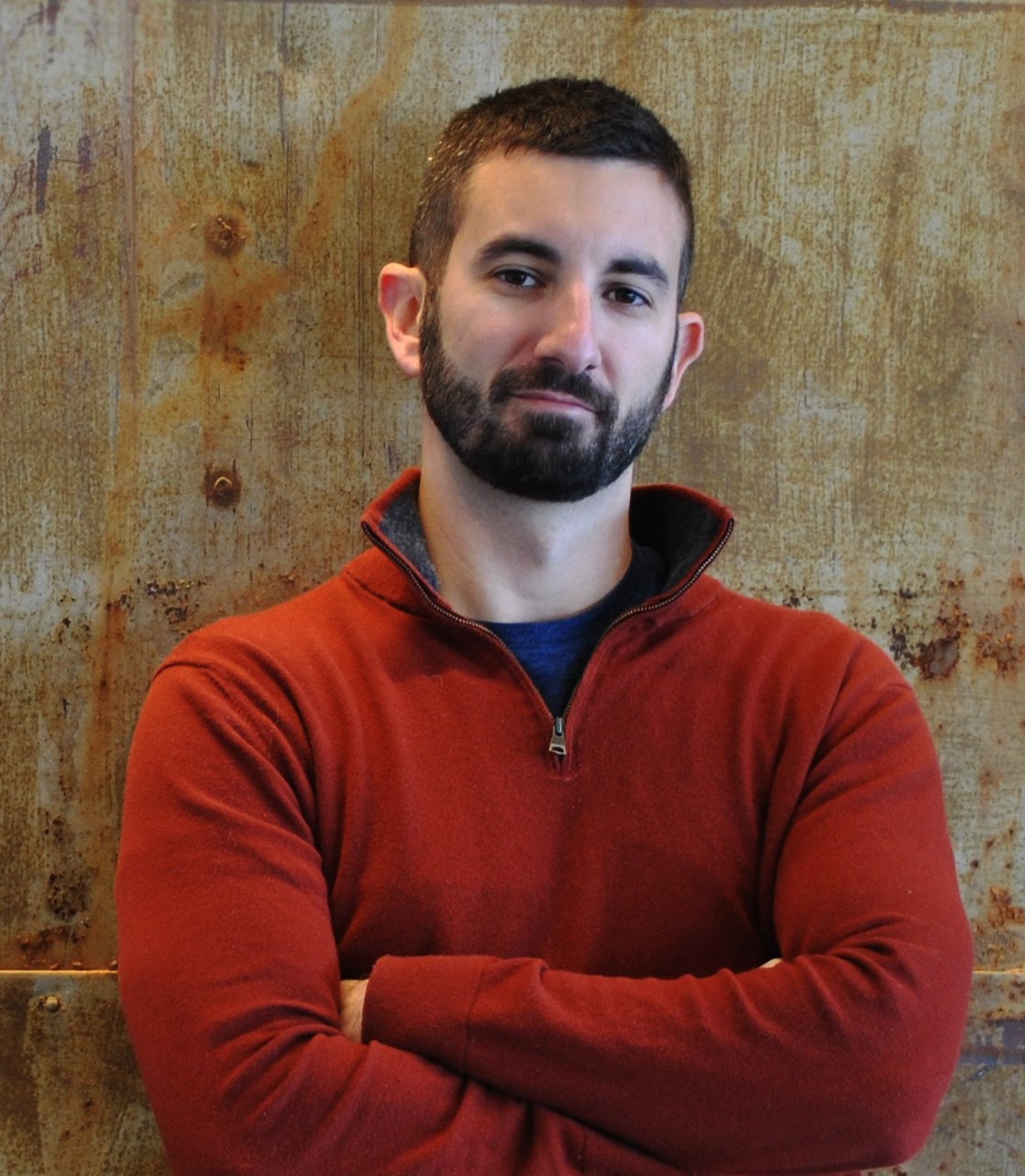 Kyle McEntee
.Richard Hy is a lawyer who represents people harmed in large-scale incidents, from mass shootings to defective products to public health crises. In this episode, he explains the strategic differences between mass torts and class actions, and uses his work on the 2017 Las Vegas mass shooting litigation to highlight how plaintiffs' lawyers think through which court, who to sue, and how to coordinate across dozens of law firms. Richard discusses the economics of contingency-fee practice, how AI is changing document-heavy work, and the secondary trauma that comes with intake after a mass-casualty event. He also reflects on how moving from insurance defense into plaintiff-side work early in his career shaped the way he approaches litigation today, giving him a clearer read on what the other side is likely to do. Richard is a graduate of Gonzaga School of Law.
Transcript
Kyle McEntee:
We're joined today by Richard Hy. Richard is a partner at a Nevada firm where he focuses on mass torts and class action litigation, representing victims and government entities in high-stakes cases. Earlier in your career, you switched firms several times. What were you looking to learn as you were making each move?
Richard Hy:
I think moving firms early in your career gets a bad rap. I think that it allows you to see what areas of law you're interested in, what areas of law you're good at, and there comes a point where moving around might not make sense, but I think it's perfectly fine. But those were the things that I was focusing on when moving between different firms.
Kyle McEntee:
And you started out in insurance defense, and that's litigation like you're doing now. Did you learn something about that experience on the defense side that you're applying today as a plaintiff lawyer?
Richard Hy:
Early on in my career doing insurance defense, you get a lot of experience or at least opportunities that you wouldn't otherwise get at certain places. A handful of my friends worked at some prestigious commercial litigation firms. And let's just say that early on in their careers, they weren't allowed to take depositions. But in the line of work that I was doing, I got a lot of experience cutting my teeth doing that, going to court, doing various aspects of the discovery process, taking lead. I think you get a lot of experience in those areas. So there's good and bad, but I think that really benefited my career.
Kyle McEntee:
So four or five years into your career, you made the move into mass torts. That might be an unfamiliar combination of words for listeners. Can you explain what a mass tort is at a high level?
Richard Hy:
Yeah, a mass tort basically means when multiple people are injured by the same incident or mechanism. So unlike a class action where everyone is harmed in a very similar way, almost identical ways, a mass tort focuses on the variations of harm that people suffer from a either single incident or a handful of incidences.
Kyle McEntee:
So this might be just my own ignorance, but I thought that you could have a class action that was also a mass tort. Is that not right?
Richard Hy:
Sometimes it's strategic in how you bring a case. Sometimes it makes more sense to do a mass tort where you're filing multiple complaints on behalf of plaintiffs. Other times it makes more sense to file one complaint on behalf of numerous plaintiffs. Again, the lawyer answer is, you know, the typical one is it depends.
Kyle McEntee:
Okay, so we're just looking at some set of facts and there's just different approaches. One is filing many different things. We'd call that a mass tort and sometimes you're filing one class action.
Richard Hy:
Yeah, it could be procedural like that in terms of strategic vision, but it also could be a factual circumstance. So it really just depends on the type of damages that are involved and the harm that's involved. Usually that's the primary basis of which vehicle to choose.
Kyle McEntee:
All right, so I want to talk about your work through the lens of a specific case. I know your work and responsibilities have evolved since then, but one of the first major national cases you worked on was connected to the Las Vegas strip shooting in 2017. When you saw that on the news, I'm sure your first thought was horror, but when did you clock that as a potential case?
Richard Hy:
That event happened around midnight or so, if I recall, and I was not aware of that occurring until the morning of. I had a bunch of voicemail messages from my parents asking me if I was okay and I said, yeah, sure. I like to go to concerts and they thought and they hoped that I wasn't there.
So then I turned on the news, I went on a Twitter and I learned like everybody else what happened. I do have to say that over the course of the next several days and weeks, our firm received a lot of phone calls about this case and that's how we kind of built our knowledge about the events that unfolded that night.
Kyle McEntee:
So you're the equivalent of a senior associate at the time, about six years into your practice. Who called you in and said, hey, we're working on this and you're working on it with me?
Richard Hy:
So the firm that I was at at the time had a structure where we all worked off of like an assembly line type process. So the whole team was brought in. We kind of assigned out specific jobs and how the case would play out in terms of like allocation of work.
So but it was a big meeting, come to the conference room and let's figure this out. And then what was your role in that, that you were assigned? So I did multiple roles, but early on it was mostly client intake. Clients would call the firm and they would set up a consult where I would ask them questions about what happened and get some basic facts and determine whether or not there was a case there. So early on in that case, that was my primary role. Obviously, there was the shooter that was also involved. There may have been other peripheral defendants that could have been sued. But strategically, you have to figure what makes the most sense in this lawsuit.
Do you sue the judgment proof assailant? Do you sue just the hotel? Do you sue the fairgrounds?
You sue them all and figure it out later. But those are questions that we all ask early on.
Kyle McEntee:
I think that's what's so interesting to me about Complex Lit is that you have this entire strategy, but then the other side has their own strategy. And it's a bit of the battle of the brains. What do you do to try to understand that other side so you can make your moves and your counter moves?
Richard Hy:
So working in insurance defense was helpful in that I got to see perspectives from both sides. Obviously, during my time doing that type of work, I was not doing mass tort defense, but it was helpful in trying to determine, well, where are these guys coming from? What are they going to try to do?
Are they going to try to keep these cases in state courts? Are they going to try to remove them to federal court where it might be more advantageous to them? What are some other procedural ways we could either delay the litigation or to make it more favorable? So I think that was super helpful to have that background.
Kyle McEntee:
So either side, you're dealing with many, many different cases. How do you keep that organized in your head as to what's the best for this particular client versus that particular client versus maybe a class that you're able to develop as well?
Richard Hy:
So unfortunately, there's only so much space in my head. We rely mostly on notes, spreadsheets. In these types of mass tort cases, I find it extremely helpful to document everything in a spreadsheet that you could sort, filter, manipulate. It may not be the cleanest way, but for me, it works. Other people use Word documents and tables within it. Other people use file management software exclusively. Through a third party vendor, there are a variety of ways of doing it. But in my experience and what works for me, I would have to say Excel spreadsheets are the way.
Kyle McEntee:
Are you able to leverage AI these days to make that process a little better?
Richard Hy:
Oh, absolutely. So the type of work that I do typically involves protective orders, which are basically a method in which cases are kept confidential, or at least certain aspects of the case are kept confidential from the public, because everything typically is filed publicly, and the public gets to see the documents, the papers for a case. But sometimes the information you're dealing with is confidential or sensitive.
It could be a trade secret, or it could be part of a criminal investigation that just can't make it light of day for now. So I use AI locally on my computer to either summarize a bunch of documents if I need it, or to basically just kind of like brainstorm.
Kyle McEntee:
I know MGM used a fairly aggressive legal strategy in response. Can you explain what they were trying to do and kind of how you moved against it?
Richard Hy:
Yeah, MGM's strategy was very novel at the time. So earlier I had mentioned, you know, there are ways that the defense could either slow down the litigation or put it in a more favorable position for them. And typically one of those vehicles is removing a case from state court to federal court.
As you can imagine, filing a case in state court and having the case heard ultimately by a group of Las Vegans who more than likely knew people who were at the event, I mean, that's tough no matter what. But removing a case to federal court gives them certain advantages. And we expected that that would happen.
But we didn't really know the vehicle by which they would do so. So MGM relied on this statute. It's not cited very often, but it's called the Safety Act.
And the Safety Act was a part of the Patriot Act following the 9-11 attacks. But basically the Safety Act provided that the Secretary of Homeland Security, if that person deemed an event, a terrorist act, then that case or at least that business that was involved in the terrorist act would not have any type of liability. It would basically absolve them.
Businesses that were involved in those types of incidences cannot be sued. So at the time, MGM removed the case to federal court from state court using that theory. They took it a step further and then tried to consolidate those cases outside of the state entirely.
Kyle McEntee:
And so you've got all these different cases, they're trying to get them heard all at once, and they're choosing somewhere outside of Las Vegas because maybe people there will have just like the tiniest bit less sympathy.
Richard Hy:
Yeah, I mean, you can imagine that an event like that touched a lot of people in the community. And to have that case heard in front of a jury of a handful of people in state court, you can imagine that would be a lot different if it were in a different state altogether with a different community. So I think it would be extremely advantageous for MGM to do that.
Kyle McEntee:
You sound like you admire the novelty here, that I'm guessing then it was actually a pretty successful strategy.
Richard Hy:
No, ultimately it was not a successful strategy. One of the downsides of trying to create those nationwide lawsuits is you have to have some sort of national controversy. So since the event happened in Las Vegas, basically MGM took the position that they would file lawsuits against victims in their states of residences and basically asking the court to say, hey, court, we want you to say that the Safety Act applied to this person and therefore MGM is absolved of any type of liability.
So as you can imagine, that that might ruffle some feathers. Yeah. So how did you feel when you defeated that?
Well, it wasn't easy. So there's this traveling group of judges and they're part of what's called the Judicial Panel of Multidistrict Litigation, shorthand for JPML. And these judges travel from various cities and they hear cases where does it make sense to consolidate all these cases into one central action that can be coordinated for discovery purposes, basically the investigation phase of the lawsuit.
So when MGM started filing these lawsuits across the country, the panel, the judicial panel was in San Francisco at the time. So we had to do briefing. We had to file papers with the court and we had to fly down to San Francisco to to argue it.
So it wasn't easy and we weren't always certain that we would win. But ultimately, you know, the plaintiffs prevailed there.
Kyle McEntee:
Is travel like that pretty common in your work?
Richard Hy:
Yeah, extremely. I think pre-pandemic, you would travel a lot for depositions. You would typically take depositions in person.
Post-COVID, I would say that travel is still a part of being a lawyer, especially when it comes to mass torts cases. But, you know, you could easily do a deposition over Zoom and have everything you need. And it's almost easier because you don't have to worry about the travel time and being in a new city, not knowing where you are.
You have the comforts of your office and you can just focus on on the strategy.
Kyle McEntee:
So if you're a defense side, less travel means fewer hours you can bill, but you're not billing by the hour, you're taking a cut of the winnings. So these kind of efficiency gains are, I think, really good for a firm like yours. I've seen other technological advances, namely AI, kind of improve your efficiencies and make you a better lawyer, but also make it so your firm can make a little bit more money than they would otherwise.
Richard Hy:
Yeah, I think AI helps different law firms in a lot of different ways. So for plaintiffs, like you said, we work on what's called the contingency fee. We only get paid if our client gets paid, whereas the typical defense firm or commercial litigation firm gets paid hourly, regardless if they win or lose.
So AI has a lot of ways to save time and do work that is just as good in a shorter period of time. But obviously, with any new technologies, we've got to learn how they work and the limits of it and ensure that they're used appropriately.
Kyle McEntee:
Yeah, when you were talking about your Excel spreadsheets earlier, my first thought was, I wonder if he uses AI to organize now in a way that you couldn't eight or nine years ago.
Richard Hy:
Yeah, so one of the aspects of mass tort cases are the documents. You get a lot of documents produced from both sides, whether it be medical records or corporate records, business records, you name it. So imagine a spreadsheet where each line corresponds to a single document, and it has certain data associated with it, like maybe the subject line, the date when it was sent or prepared, or the summary of the document itself prepared by a lawyer.
If you're talking about millions of documents, that's a lot of lines of Excel. So, you know, artificial intelligence does have the capability to streamline things and make work more efficient.
Kyle McEntee:
But there's probably always a human in the loop, I think is the phrase for y'all, right?
Richard Hy:
I would say that you always need a human in the loop. I think not having a human in the loop would expose you to certain things that you probably don't want to be exposed to.
Kyle McEntee:
All right. So speaking of humans, we've talked about your mass tort practice in almost a gamified way, but there's like underlying tragedy and horror also. So when you're working with clients who've gone through something so horrific, like the Vegas shooting, or some of the other cases you've worked on, how does that affect how you're approaching the work?
Richard Hy:
You have to take each case on its own. I think that's number one. And you can't make it about yourself.
For the Route 91 litigation, the October 1 litigation, I spoke to thousands of potential clients. A lot of them we ended up signing up. Part of that intake process is recounting events that happened that night and going into the details of it, which sometimes are not the most pleasant, let's just say.
Secondary trauma is a real thing. Yeah. So imagine sitting there for half an hour talking to this person who you want to sign up as a client and reliving what they went through.
And in today's day and age, people have social media, they share things, and they save videos, they save pictures. So I specifically remember a moment where I was doing an intake with a person who was attending that festival. And she showed me a Snapchat of her hiding underneath a food table, one of those metal tables where they use to prepare food.
And you could hear the bullets ricocheting off that table. So stuff like that, it totally gets to you. It's hard, but it's part of the work.
And you just have to remember, take each case on its own, I think is important. What about when you struggle to do that? It can creep into your personal life.
It's tough. You have these cases where someone suffered a lot of trauma, and you, as their attorneys, suffer the secondary trauma of sorts. But you have to remember that you're doing this for the client.
It's for their benefit. You have to separate as much as you can. It's sometimes difficult emotionally to detach yourself like that.
But I think it's absolutely critical at some point. Otherwise, it just consumes you.
Kyle McEntee:
How do your clients think about justice in this case? I mean, often, the outcome is financial. And in a settlement, there's no, like, I'm not blameworthy.
That's going to be a key settlement requirement for, say, an MGM. How do you talk about what justice looks like with your clients?
Richard Hy:
You know, more than often, the compensatory nature is what a client looks at in terms of justice. But not always. A lot of times, it's making a company change the way it behaves so that others aren't affected in the same way, and they aren't hurt in the same way.
Kyle McEntee:
So I'm imagining that it's not just your firm that was involved with this litigation. Is that something you talk about with those other firms, about the human side of things? The human toll and the toll on you as a lawyer?
Richard Hy:
Yeah. So when these mass tort cases typically happen, they happen in different states. And different attorneys get calls from various people in their community.
And when an event happens like the 1 October shooting, people get calls everywhere. And we have a lot of law firms that are involved in the process. We had, I think, about 100 law firms on the plaintiff's side that were part of our group.
So we had over 100 law firms that were working together to help all the plaintiffs in this case. And the administrative side and the politics obviously play a part. But yeah, that result could not have been done by one single firm.
It was the effort of many firms. And I know that the firm that I was involved with at the time was one of the leaders in that effort.
Kyle McEntee:
All right. So let's talk about some of the work you're doing at your current firm, because I know your responsibility and scope has shifted. Since the days of this particular case.
Can you talk a little bit about the opioid litigation and representing the state of Nevada? And kind of how it comes to be that a private firm ends up working for the state?
Richard Hy:
So the state obviously has its own lawyers. And they're typically the attorney generals of the state. There's an attorney general and people that work underneath him or her.
But sometimes cases are complicated. Sometimes they're outside of people's expertise. And most importantly, they're expensive.
And it's impossible for any local government to go up against the largest, most liquid companies with any choice of lawyer at their disposal. So we represented the state of Nevada as outside counsel related to the opioid litigation, where the state sued various drug companies for their role in causing the opioid addiction crisis.
Kyle McEntee:
So they're paying you, right? Or is it contingency as well?
Richard Hy:
It's contingency as well. So there's a lot of risk involved in those types of cases. So in a contingency case, just to reiterate, you're not getting paid on the front end.
You're getting paid after there's a result when your client gets paid. So there could be a potential outcome where you've invested millions of dollars and thousands of hours to a case only to result in a dismissal and nothing to show for it. So people say, oh, it's a sweetheart deal.
These outside counsel arrangements are favorable to these trial attorneys. I would say that it takes a lot of risk. And it takes a lot of willpower to go through these types of cases, knowing that it could be a bet the farm type situation.
Kyle McEntee:
I mean, traditional contingency fees are 33 to 40 percent net costs. Is that the same rate you're getting with the state?
Richard Hy:
No, depending on the state, there are certain statutory protections in place. So for us in Nevada, the statute limited attorneys fees to no more than 25 percent. And the way that our contingency fee agreement with the state worked out, there were certain escalators that we had to hit in order to get capped off at 25 percent.
In other words, we didn't start there. We started lower and then kind of worked our way up as we met certain milestones and goals.
Kyle McEntee:
Do you feel like that's a weird incentive structure, or do you think that's a net positive for taxpayers?
Richard Hy:
I think it's a net positive. In mass torts, if you have companies that don't take responsibility and cause a lot of people to be harmed, the state typically is not in a position to initiate litigation on such a large scale. It takes a lot of capital.
It takes a lot of resources. And state budgets are constrained as they are. So I think it's an arrangement that works.
Is it perfect? Probably not.
Kyle McEntee:
But what arrangement is, right? Correct. I think what's interesting here is the analogy to the individual plaintiff.
On average, they're not going to have the money to pay the lawyer hourly rates. And you think of the government as like these deep coffers. But as you pointed out, there's budget restraints, there's budget timeline restraints.
And it does strike me as a decent balance of holding people, companies accountable and minimizing the cost of actually seeing that through.
Richard Hy:
Yeah. And also, too, in a contingency fee arrangement with the state, the state's not paying an hourly rate. So the results are shared between the law firm and the client, right?
So imagine if you were a state and you were a citizen of the state looking at the budget, and you see a bill for $500 an hour for an attorney charging for working on a case. For however many hours in a day multiplied by the number of years, by the number of people, that number can get pretty high. So what system is perfect?
I think this works. I think this is a good mechanism to kind of curb those types of abuses. And happy to be a part of it.