
Defending the Whole Client: Criminal Charges and Their Hidden Consequences
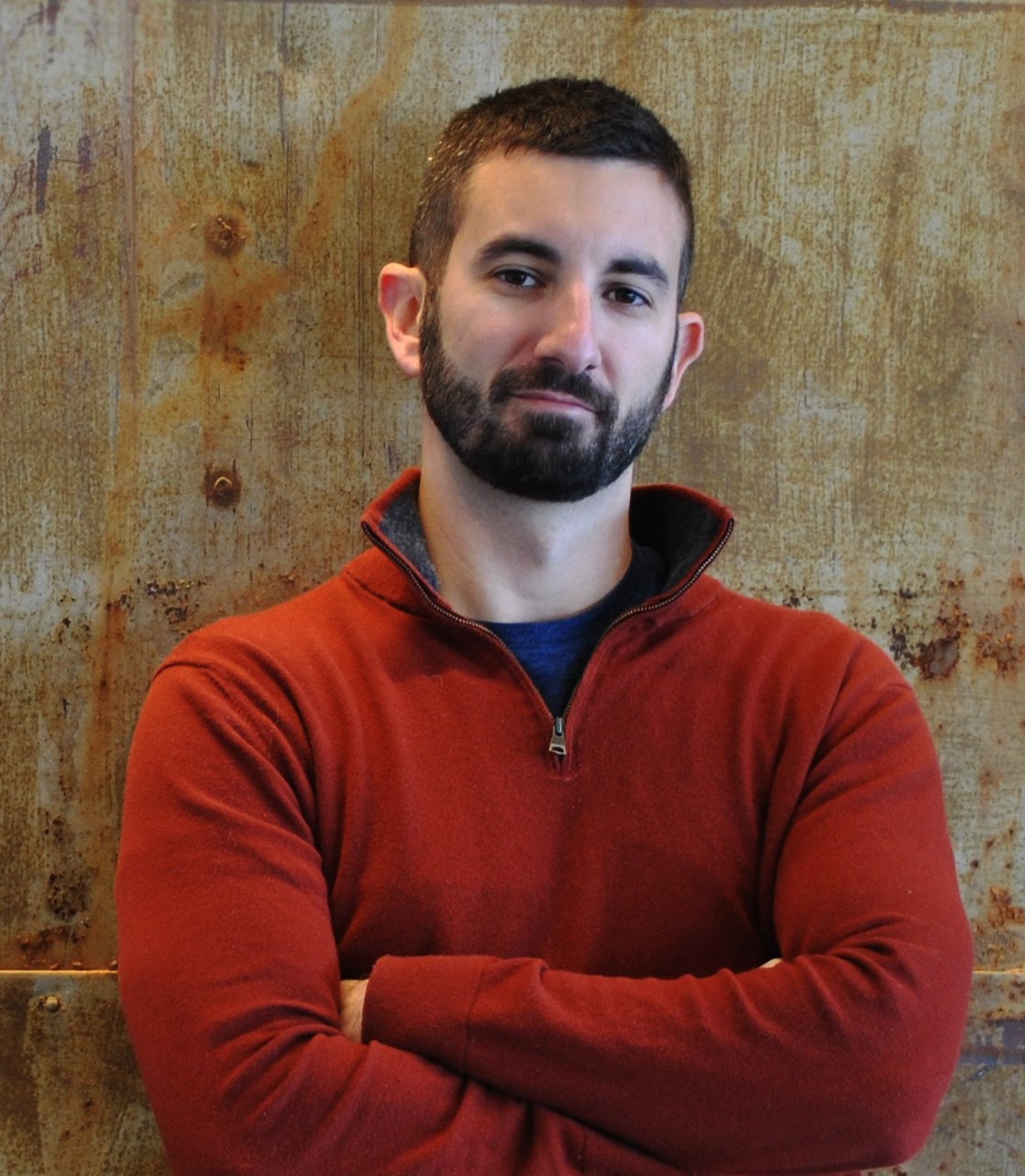 Kyle McEntee
Frances Prizzia began her career as a public defender. Today, she runs her own criminal defense practice, representing clients facing charges ranging from DUI and assault to murder. In this episode, Frances explains how a criminal charge can often have damaging consequences outside the courtroom, affecting a clients’ housing, immigration status, professional licenses, and family matters. These are areas that public defenders frequently have limited ability to address. She walks through an attempted murder case involving a client with schizophrenia to show how mental health history can shape defense strategy. Frances also breaks down preliminary hearings, plea negotiations, and the many factors that go into deciding whether to take a case to trial when the stakes can mean decades in prison. This leads to her desire to build a more holistic practice and the hard limits of what a lawyer can do when clients insist on making their own choices. Frances is a graduate of Santa Clara University School of Law.
Transcript
Kyle McEntee:
We're joined today by Frances Prizzia, a criminal defense lawyer who defends individuals accused of a large variety of crimes. From DUI and assault to murder, her clients stand accused by the government of breaking the law. And exploring their mental health history can reveal strategies you might otherwise overlook.
Given that the consequences for these clients, if convicted, can be far-reaching, some criminal defense lawyers are turning to a more holistic approach in their representation. Frances, let's talk a bit about how you ended up starting your own firm. You started out at the Public Defender's Office. What drew you to doing public defense in the first place?
Frances Prizzia:
So, it was a bit of a long path. I actually didn't even want to be an attorney. I was a B.S. psych major. I worked at a lockdown facility for schizophrenic convicts after college. That's when I first came in contact with the law and incarcerated individuals who were what we called 1368-ed, where we felt that they were not necessarily fit to stand trial because of some mental issue or a plea of insanity. So, I went into law school.
While in law school, I did some immigration and VAWAs, political asylum cases. One of the semesters, I was unable to do the immigration clinic due to the fact that, I guess it was full, and I ended up doing the Northern California Innocence Project externship. And it was a clinic in Santa Clara University.
That's when I read through different individuals, incarcerated individuals who had been convicted who would send us letters stating that they were actually innocent of this crime. People would then become exonerated via DNA, new evidence, testimony, or recanted testimony. So I worked on those cases, and then I became intrigued at how it all fell apart during their trials.
And a lot of what I saw were individuals who weren't prepared to go to trial. And I became very interested in becoming a public defender, not just a criminal defense attorney, but actually a public defender. I actually see public defense work being in service as kind of a David and Goliath story.
It was challenging those who had the money, who had the means. And I always had it as my mission to do something more to support those who are actually voiceless. So, I think being focused on public service, that was the path I chose to defend those who are incarcerated, who are usually people of color, who are indigent immigrants, and don't necessarily have the same resources or opportunities as the mainstream.
Kyle McEntee:
So as a public defender, you're a little bit limited by what you can address, not just because you have so many cases at once, but because of the scope and mission of public defense work. Can you talk a little bit about the practical aspects of being charged with a crime beyond the obvious?
Frances Prizzia:
So as a public defender, you get the criminal case once you're appointed during an arraignment and you're only focused on defending the crime at hand. Now there are so many other implications when an individual is arrested or accused and then ultimately charged with a crime. For example, if an individual has Section 8 housing, a conviction can cost them to lose Section 8 housing.
If an individual has immigration consequences, immigration court will come into play. When it comes to domestic violence, what will occur is, if they have children, then CPS can come in, take the children, open up a referral, send it over to dependency court. When it comes to DUI cases, there are DMV implications.
They can go after your license. It can run concurrent with your criminal case and you can be forced to testify in this restraining order matter that could potentially open you up to incriminating questions that can be used against you in the criminal case. So there are several implications that occur when you're accused of a crime that a public defender cannot necessarily help on because a public defender is only appointed specifically and based on the Constitution rights representation in criminal cases.
Kyle McEntee:
How do you learn about all these consequences? That's a lot of knowledge to accumulate.
Frances Prizzia:
Well, I've been an attorney for over 20 years. So, I knew about the immigration consequences because my basis was and foundation was initially in immigration. I started learning about other implications such as the driver's license when I was speaking with clients who were accused of DUI.
And then I realized I would have to then take cases to trial that I felt should resolve because it would cause some sort of issue with their licensing. If they're a truck driver, the DMV will revoke their license, potentially suspend it for a significant period of time without any sort of restrictions. When I spoke with clients who had domestic violence cases and they're stating, Okay, well, I have to go to this other court. And I didn't understand what this other court was. And it was dependency court or there was family court. And even though they did not have the children included in the protective order within this domestic violence criminal case and a protective order was provided by the judge to only keep the client away from their significant other, the issue would then be, well, there's another competing court matter where I now limited in custody cases. So that's when it started coming up. And then I heard about Section 8 housing. And then I heard about if they needed financial aid, and how it would affect veteran benefits.
So I started hearing all of the actual implications of a crime that we are never made aware of. Being accused, it can completely destroy somebody's life even after they're exonerated in criminal court. They've already lost everything.
Kyle McEntee:
It's about survival. And you have all these tools that you don't get to use necessarily as a public defender.
Frances Prizzia:
Yeah.
Kyle McEntee:
And I don't think like in saying that we're maligning the work of public defense in any way. But it does show that there's all these tentacles out there that flow from a charge that really implicate people's ability to continue to live. Even as you said, in the case where they were wrongfully accused.
Frances Prizzia:
Yes, absolutely. And especially being incarcerated, they have their jobs that you need to communicate with. They have, again, all the licenses. And by the time they get out or if they don't get out or if they have to settle on something, it could affect them in immigration court. They are being thrown out of the country or having their green cards revoked. And PDs can't help with that, unfortunately. So I was very limited.
Kyle McEntee:
All right. So now you are on your own, you have a firm in private practice. And one of the many types of crimes that people are accused of that you help with are murder charges. I think the consequences to a murder charge are a little more obvious than some of the other crimes we were just discussing. But key here is everyone charged with a felony is entitled to a lawyer. But not everyone is entitled to you.
Does having that choice change how you feel about defending someone accused of murder or attempted murder?
Frances Prizzia:
As a public defender, I didn't have a choice. I took whatever case was assigned to me. As a private attorney, I do have a choice.
I don't usually exercise that choice that often when it comes to refusing cases. I would usually refuse a case if it was a client that I felt was going to be a headache for my team. So, it's not necessarily the charge.
It's not necessarily the facts of the case, because I always see that it's a challenge. And, I think if I start looking at the facts of the case, it changes my mission and my calling because I think I am still very much a public defender at heart, which is everybody is still entitled to competent and zealous advocacy, even though I'm in my own law firm now. So, what I look at and what I determine whether or not I would take a case, is not if they committed it or what the facts are.
I still have the view, the perspective of, I was not there. I did not walk in this individual's shoes. I'm not sure what actually occurred and why it occurred, or the psyche or what choices they may have made.
So, I still have the same perspective of looking at a case as a public defender.
Kyle McEntee:
Let's go through an example. So, you once had a client who stabbed a family member and was charged with attempted murder.
Frances Prizzia:
Yes.
Kyle McEntee:
Tell me a bit about the situation and why you can even talk about it.
Frances Prizzia:
Yes, without providing names because it's still an open case. The individual, he has been diagnosed schizophrenic. He is still in custody.
What he was hearing were these voices stating that this family member had an evil spirit within them, that this family member was not actually his family member, that this knife was not actually a knife. He described it as a wand that he was using to just kind of swipe away at whatever was inside of her. And the reason I can actually talk about these specific facts is because, we had already filed a brief regarding mental health diversion and we are attempting to enter into some sort of guilty by reason of insanity to resolve the case.
So, the facts that I am providing you at this point have been placed into the court file and the information is already public, regarding this specific matter. And we hear things on the news sensationalized or snippets, okay, this person stabbed his mother, sister, whatever. And he just continued to stab them and the injuries were horrendous.
And the mother, she had significant injuries, ended up in the hospital for a significant amount of time. This guy is a bad guy.
But we get to look at other things such as why did this person do this? What was their mental state? Was there a diagnosis? Were they actually in the right state of mind? What was their intent? What was their motivation? It creates a different perspective and a different picture.
We're not now looking at this bad guy who decided he was pissed off and decided to stab a family member. It's an individual who needed help a long time ago, who had a history initially of stealing cars because the voices in his head told him to steal cars. And instead of the prior attorneys, his prior representatives looking at why is this happening, it was more of, oh, you don't really have a record. We should just plead you out and get you out of jail, or,
Oh, you know what? You don't really have a record. We can cut a deal and have you just do some community service and just do really well on probation, or, Oh, let's not have you assessed because that's going to take a really long time, you have some felonies, but you don't have any strikes, so why don't we just plead you out to this or do something else.
Instead of actually focusing on the root of the problem, which was he had been diagnosed with extensive hallucinations, delusions, schizophrenia, should have been on meds. And that's what should have been the focus, because then we wouldn't be in the situation that he's now facing an attempted murder charge.
Kyle McEntee:
All right. So, your first attempt to resolve this, right, was the mental health diversion.
Frances Prizzia:
Yes.
Kyle McEntee:
Can you talk about the practical aspects of getting that as the lawyer? What is the work that you're doing? Who are the expert witnesses? What do you need them to prove? How do you get them to tell you or tell the court what's necessary to actually get that diversion?
Frances Prizzia:
This is actually really on point right now because there was a sudden change in diversion. Governor Newsom actually significantly changed the elements of mental health diversion. So, he signed something into law based on the legislature's lobbying.
So, in California, there are multiple different diversions. There's veterans' diversion and then elements that you need to meet to be able to be eligible and suitable. There is drug diversion, there's judicial diversion, and then there is also mental health diversion.
So mental health diversion, which is what I was hoping to have my client enter into, focuses on whether or not there are certain criteria, such as - did this person have a diagnosis? Who diagnosed him? Does he have a history? Was the mental health diagnosis and the mental health issues a significant factor that caused the crime that he is being charged with? Is he willing to enter into the mental health program? Is he willing to waive time? Is he willing to take medication if necessary? Is he suitable? Is he a risk to public safety?
What I usually do is I first review the police report. I interview the client and then I have my investigators interview any of the witnesses or the victims, specifically in this case the family members, to find out what happened. In the police report alone, it was readily apparent that he had a mental health breakdown because of what he was saying to the police officers, such as seeing things, hearing voices.
And then I saw his history and spoke with the family members and realized that he had over 20 years of being diagnosed with schizophrenia and being on and off of this medication. So then I hired an expert to see if she can assess him. And through that assessment, she goes through testing.
She goes through social history. She goes through the actual facts of the case, listens to the discovery that I provide her, audio, video, body-worn cameras, as well as the police reports. As soon as she finishes that, she will then let me know if he does meet the criteria for mental health diversion, meaning is he eligible.
Qualifying mental health condition - the mental health condition was correlated to the actual crime and whether or not he is a significant danger to the public. That actually was the change with Governor Newsom. He made it stricter.
It used to be an undue danger to the public, where it focuses on potentially having engaged in a super strike in the future. Now it's a significant danger to the public and we don't have case law on that yet.
Kyle McEntee:
So how do you think about that? Because when I think someone is a significant danger to the public, what's the best evidence of that? Well, they stabbed someone.
Frances Prizzia:
So, prior to the change, it was more of “dangerousness to public.” I don't have the exact language. I think it's “undue danger to public”? But the case law had interpreted it to be whether or not this individual would more likely than not commit a super strike in the future.
Kyle McEntee:
And what's a super strike?
Frances Prizzia:
A super strike would be attempted murder, hot residential burglary, basically crimes of violence, enumerated crimes, kidnapping, things of that nature.
So, would my client necessarily have been a candidate for this? He was a good candidate, but we had to get over that hump because that is a great question.
The argument for me was if he had been on meds and if he continues on meds, would there be a likelihood of him committing a super strike or within that dangerous category in the future? The answer would be no, but he has to stay on his meds. If he did not stay on his meds, could this happen again? Yes, because it's schizophrenia. It's one of the hardest illnesses to treat. And I can't necessarily say cure, because there is no cure, but it is to treat.
You have to stay on your medication. You have to make sure that you are monitoring the medication to see if there's a sudden change, biological change, hormones, whatever it is. They might need to up the dosage or lessen the dosage or change the actual (if there's some tolerance) you need to change the medication. So that was one of the most difficult criteria, one of the elements that we were having a difficult time meeting.
The courts were interpreting it a certain way because, your concerns are valid, because what ended up happening was some of the courts were allowing individuals into mental health diversion that committed another serious offense and the community started lobbying to have a change in the language of mental health diversion, which then Governor Newsom signed into law, which was, it is no longer an undue dangerousness. The language became a significant danger to society and to the community and there needs to be a review of the injuries, past history, which did not provide prior guidance.
And so now it's a stricter standard. And in this particular case, my client would not be suitable. He would be eligible because of the fact that he has a mental health disorder and the correlation.
However, he would not be suitable because of the dangerousness aspect.
Kyle McEntee:
Well, a few things here. The first is you are taking it seriously that there was a stabbing, right?
Frances Prizzia:
Absolutely.
Kyle McEntee:
And then you're saying, okay, it won't happen again because it's treatable and he's agreed to be treated. So that connection makes a lot of sense to me.
Frances Prizzia:
Right.
Kyle McEntee:
What is really interesting, though, to observe here is that there are these outside political calculations being made by a governor who has political aspirations to go beyond that, right?
Frances Prizzia:
Yes.
Kyle McEntee:
And not commenting on the good or bad or the who on that, but there are consequences to these outside political forces on your day to day that you have to learn in the moment and apply immediately. And I think that's just really kind of interesting to observe about how interconnected the legal ecosystem is.
Frances Prizzia:
Absolutely. I have cases right now that I felt were slam dunks for mental health diversion. I had already filed the motion. The D.A. had already filed their opposition. It had been continued a few times because either the courts were impacted or the D.A. needed to add something else to their opposition or Marsy’s Law needed to be complied with. And Marsy’s Law is victims' rights.
So the victim, if there was a victim in that case, well, in three of my cases, there were victims and they needed to be contacted, which caused a delay in having my motion heard. So, now, based on the new law that came in, and I do agree because of the politics in it, I don't know if my clients are necessarily, with the new change, suitable for mental health diversion. I am now going to have to find a different route for them, even though I do feel that rehabilitation is best.
And me pleading them to a charge and getting them either minimal jail time or some jail time or community service is not necessarily going to benefit the community because the underlying issue, which is the mental health issues, which the diversion actually focuses on, and you will be terminated for mental health diversion if you don't follow your treatment plan, and you do end up getting incarcerated. So, that chance to change the pathway for my clients through rehabilitation or mental health support has now been cut off.
Kyle McEntee:
I think, it's probably pretty apparent to people why a change to the law would affect your strategy, right?
Frances Prizzia:
Yes.
Kyle McEntee:
I think what might not be as obvious is when criminal procedure changes or even just criminal procedure generally affects their strategy.
Can you talk a little bit about that?
Frances Prizzia:
So, for example, in California, there is something called an Estes robbery, and it basically means that if you use any sort of force or potential threat, then a petty theft or a regular burglary, like when you walk into a convenience store and take a Gatorade, it becomes elevated into a strike, an actual robbery. So, I had a case where a drunk client went into the store, and I can't remember if he was trying to get beers or a Gatorade or something really of limited value. And the store owner began arguing with him, and my client argued back because he was drunk.
There were no weapons. There were no threats of, I'm going to kill you. But, the store owner or rather the store clerk grabbed the client, and the client moved away with the items, either Gatorade or beer or water, whatever it was, was still on his person, and he ran away. And there was a struggle. That petty theft, burglary, misdemeanor case was elevated to a felony strike for a young kid who's about 22, 23 years old because of the Estes robbery, which is the case. So any sort of struggle. So, I went to prelim on that.
Kyle McEntee:
And a prelim just means there's a hearing before a judge who's going to make some kind of determination.
Frances Prizzia:
Yes. So, in other parts of the country, I believe majority of the country, it's a grand jury proceeding. So, in California, when we have a felony case filed, it is a complaint.
And then for it to be determined to be an information, it goes into a prelim. A prelim is to determine whether or not there was adequate probable cause to have the defendant, the client, to be held to answer on the charges. And so here in California, we rarely conduct grand jury proceedings.
Usually, it's a major gang case or police brutality or other officials who are being prosecuted. The majority of cases go through a preliminary hearing. And this was a preliminary hearing to determine whether or not there was probable cause to hold this young adult to an Estes robbery, a strike for taking something at a convenience store with no weapons and no threats, but just a tug to get away from the store clerk for an item that costs less than $10.
And, there was also a motion that I made to request that it be reduced to a misdemeanor via what we call a 17B motion because it was a wobbler and the judge denied that. And so, I filed a motion for a 995. And a 995 motion is to state, I believe that the judge did not make the correct decisions. I believe that it did not meet the criteria, the probable cause standard. And this reviewing court should look at this, hold it to that standard and dismiss the case.
Kyle McEntee:
So I guess the point here is that there's just a lot of different places to fight charges.
Frances Prizzia:
Yes.
Kyle McEntee:
Right? So, this is before a trial. So, before a jury's even been convened and you're saying, hey, I don't think this meets the standard to continue with this. Or, and then with the 995 motion, saying the judge got it wrong in their evaluation.
Frances Prizzia:
Correct.
Kyle McEntee:
And so how are you deciding when is it enough to say, Okay, I'm going to stop fighting and we're going to prepare for trial, or, we're going to consider a plea?
Frances Prizzia:
It actually depends. So, for example, if the exposure is significant and the facts, I believe, are not necessarily in our favor, very much so not in our favor, then I would advise my client to see if we can obtain a plea. If there is no negotiation, for example, the prosecutor is refusing to give any sort of offer or the offer is something that we would actually get if we lost a trial, which is equivalent to a non-offer.
I remember getting an offer of like 45 years on a case and my client was 60 years old. So, I'm going to trial. There are so many variables that go into it.
If it is a completely unreasonable offer that there is, might as well roll the dice because there's nothing to lose and I'm going to go to trial, or I'm going to continue trying to fight it because I know I probably can't even win a trial. So, I'm going to continue on with the 995 motions with whatever motions that I could create to be a thorn in the D.A.'s side to have them realize, okay, maybe I should provide the defense a better offer to just make this go away. But on the flip side, if it is a reasonable offer, if I feel that my client is not going to be a good witness or I can't put my client on the stand, there are no other witnesses that can testify, there are no other avenues, then I will consider a plea.
If it is a strong case and it is a bad offer and I've run the motions, because I always know that jury trial, there's always a risk, then that will make my decision if I'm going to go to trial. I also look at where I'm going to trial. Is this the judge that is going to give me a fair trial where I can run my case? Or, is this judge going to be a second prosecutor on the bench?
Is this judge, even if he or she is going to let me run my case and have it be fair, if the jury convicts my client, depending on what evidence comes out, then is this judge giving you the max? Doubling what the offer was, regardless of what comes out at trial and regardless of the sentencing brief. Do I have cooperating witnesses? Do the witnesses look credible?
Is my client a Spanish speaker or some other speaker that I'm going to need an interpreter? And am I in front of an Orange County, purely Caucasian jury? So, is my client a person of color?
Is he a Black individual in South Orange County where that's the jury's going to come? And he's not going to get a good trial or a good jury pool because they're just not going to be members of his community. So sadly, in this type of law, it's not just the facts of the case.
There are so many different things and variables that go into the decision to actually go to trial.
Kyle McEntee:
And it's incredibly high stakes, right?
Frances Prizzia:
It's incredibly high stakes, yes.
Kyle McEntee:
Yeah. And beyond your assessment of the situation and what the best strategy is, you still have to let the client make the determination on their own. So how do those conversations go?
Frances Prizzia:
I lay out the good, the bad, the ugly. I lay out the pros. I lay out different ways that the trial can turn out.
I provide them with information as to where I think the weaknesses are of the case, how I believe people will testify, what I believe the rulings will be. So, what we see in trial is not necessarily what the jury sees. I mean, we've seen this in Michael Jackson, the OJ case.
Many things that were provided to the jury were cut down and dwindled because of motions in limine to state, No, we're going to suppress this evidence. This evidence is not going to be allowed in because, either it was collected incorrectly or inaccurately, or, just the lawyers did a really good job objecting or making legal arguments as to why it didn't meet the standard to be allowed in front of the jury, or state, this is confusing, or, this is more prejudicial than probative. So, what the media, which is, again, sometimes sensationalized, is providing the information that a regular TV viewer who's watching these high-profile cases, what they're receiving is completely different from what the jurors are receiving because so many things have been cut off or limited and not allowed to be talked about.
So those are the things I discuss with my clients, Okay, this is probably not going to go in. This is extremely important.
And if the judge kicks this out, that's our defense, or, discussing that this is going to go in and this is extremely important, and this gives us an opportunity to be able to argue whatever it is that the defense is to the jury, this is what you're facing if we go to trial. And this is what this judge I think is going to do. So ultimately, it is up to you.
So I lay out everything to the client because it's so high stakes. And ultimately, are there times that I nudge if I think that we have a good offer? I do. I do, I nudge, and then I will write down, Okay, you don't want to take this offer, I think this is a good offer, and these are the reasons why I think it's a good offer, and I want you to sign this or to send me an email stating that I explained all of this to you and the risks of trial, and that you are choosing to exercise your right to go to trial.
Or I'll go the other way, I think you should go to trial. But you are choosing to not go to trial,
you're choosing not to fight this, I'm telling you, these are all the consequences that you're going to face by taking this deal, and I have explained to you why I believe this case should go to trial, but you just want to be done, and I understand that. But I want to be on the same page. So, respond to this email with your answer and acknowledging that I gave you all of the information that is necessary.
Kyle McEntee:
So, one of the reasons you moved to private practice was you wanted to have this more holistic approach to a practice. Has it been what you wanted it to be?
Frances Prizzia:
Yes and no. Part of it was also, I'm a mom. And I wanted to have some free time to be able to be a very present and active mom as my children grew up.
And also, to be able to focus on the holistic type where my client doesn't have to go to multiple places. I can look at, kind of like a doctor, the issues and diagnose each and every symptom and provide them with what they need. There are times when my clients don't want to be diagnosed for everything that is needed.
They are very tunnel vision, especially if an individual is accused of a crime. They just want this done. There are some clients who are like, No, I don't want anything. I want this done. I don't care if this is going to affect my family case or if I'm going to lose custody of my kids.
So it becomes frustrating because I see what is in the best interest of the client, but I must do what they are requesting me to do, which I know is going to cause them harm later on down the line.
I have other clients who want to go to trial or to just have their story be heard at another hearing that is prior to the criminal case. And I'm trying to stop them from doing that. And then they get rid of me.
And then they go with somebody else who lets them say this. And now I have to fix the aftermath of how that's going to affect them in the criminal matter. So...it's ...it’s a lot more work.
It wasn't as neat as I thought it would be. I still enjoy helping the clients, but it is a lot more work, and it is herding cattle.