
Proving Someone Can't Care for Themselves: Mental Health Conservatorship Trials
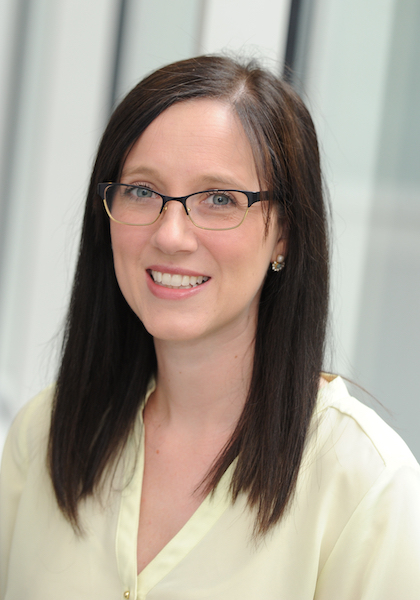 Katya Valasek
Leanna Taing is a lawyer for Los Angeles County, where she represents the Office of Public Guardian in mental health conservatorship proceedings. In this episode, she explains what happens when someone is unable to care for themselves due to a mental health condition and no family or friends can step in. Leana walks through how cases move from hospital referral to courtroom, why these civil cases require proof beyond a reasonable doubt, and what it means to cross-examine someone whose autonomy is at stake. She also discusses managing a caseload in the hundreds, the shift from bench trials to jury trials, and how she transitioned into this work after seven years in child welfare law. Leana Taing is a graduate of UCLA Law.
Transcript
Katya Valasek:
We're joined today by Leana Taing. She's a Deputy County Counsel in Los Angeles County. Los Angeles County has close to 10 million residents, its own hospitals, its own child welfare system, and its own law office to handle everything that comes with running it all.
Leana, how many lawyers are there and who are the clients?
Leana Taing:
So, the client is, this is a little bit tricky, but the client is actually the Board of Supervisors. So they're the governing body for Los Angeles County. I am one of the attorneys for the Office of County Counsel.
So I work on behalf of the county. There are 18 plus divisions in the Office of County Counsel, and that's because LA County does so many things. They have hospitals, they have transportation. So, our hands are in every kind of local agency level. And so, they also need attorneys to assist these local agencies in doing what they're trying to do for the community. So, we have hundreds of attorneys. In my division of LPS[HS1.1], mental health conservatorships, we have about a team of 15 to 20 attorneys in my division alone.
Katya Valasek:
Within the divisions, there are some that are court-facing, and some that are more advisory. What is the difference between those two functions?
Leana Taing:
I've been fortunate to be able to sit in two divisions that are actually both court-facing. So that's where we're actually in court and we're litigating on behalf of the agency that we're working for. Not all of our fellow colleagues are doing that work.
So they may be working for a different local agency. They're not sitting in court, but they're an advice hotline. So if the client or agency has any questions of like whether or not this is legal or there's a new legislation, how do we enact this?
Those are questions that they may be asked to answer and give a legal opinion on of what is the best way to go forward.
Katya Valasek:
So, at the moment, your cases are mental health conservatorships. Start us at the beginning. Who is the person at the center of one of your cases?
Leana Taing:
So, the individual is someone who's living in LA County that has a mental health diagnosis and is unable to take care of their basic necessities of life.
Katya Valasek:
How do these cases get to you? Who decides that this person needs a conservatorship?
Leana Taing:
So, the agency that I work with is the Office of Public Guardian. One of the things that they do is that they serve as the conservator for individuals who have mental health conservatorships. And so they have a mental illness and they're unable to take care of their basic necessities of life.
If there's a family member or friend who's able to do so, we're not going to be the one stepping in. The Office of Public Guardian only steps in, when there's no one there.
So, how does this process start?
Well, usually most of our cases come through referrals from the local hospitals. So, if someone has a mental health episode and they've been 5150ed, the physicians will determine whether or not someone is able to be released from that hold (mental health hold) or if they need further resources and support. For example, they may need an LPS or mental health conservatorship.
So we get the referrals from the hospitals (we as in the Office of Public Guardian) and we'll investigate whether or not this is a proper case to go forward on. And if they believe that this is a case that should be filed, they reach out to our office, the Office of County Counsel, and we will file the petition on their behalf.
And for all the court proceedings, we are in the courtroom representing their position that this person needs help and needs a mental health conservatorship.
Katya Valasek:
And I want to be clear about what the case is. And it's basically to assign someone to make decisions on behalf of the person who needs a conservatorship. So that's why there's a legal component, right?
You're essentially taking away someone's rights.
Leana Taing:
Yes. So mental health conservatorships are very special in that they offer certain powers, such as the ability to involuntarily hospitalize someone or the ability to involuntarily provide medication. So those two things, the court has deemed them to be deprivations of liberty, which is why, even though this is a civil proceeding, criminal standards apply.
So, individuals who are in this process, they are represented by the public defenders. They have a right to a court trial or a jury trial. And when we do go to trial, the burden is on the Office of County Counsel to present a case beyond a reasonable doubt that this person at this time has a mental illness and they can't take care of themselves.
Katya Valasek:
And you are representing the public guardian. So, you are advocating that this person should be able to make the decisions on behalf of this individual that was referred by someone medically that cared for them.
Leana Taing:
Yes. We're saying that this person can't take care of themselves right now. So, we're recommending that a conservatorship is placed over them and that a conservator, someone else, is able to make decisions either about their person or their estate.
And sometimes, most of the times, we recommend family and friends if we're able to find them and if they're willing to serve as conservator. In some cases where we can't find anyone, we're recommending the Office of Public Guardian to serve. I do want to note that this system keeps in mind that mental health is fluid.
Someone with treatment, with medication, is able to regain their ability to take care of themselves, which is why the conservatorships are time limited. They're only one year. And we have to come back every year to assess whether or not the conservatorship is still needed.
Katya Valasek:
So, if family and friends are found, are you still involved since you represent the public guardian?
Leana Taing:
We're involved up into the point that someone else is appointed as a conservator. So when we start this process, right, when we file the petition, we're telling the court and we're telling the person, we're seeking conservatorship over you for a period of one year. Until we have the trial, we've asked for a temporary conservatorship to be in place.
So, until this is all resolved, we are the person who is your conservator.
Katya Valasek:
Okay, so I want to dig into a little bit about this process that you just highlighted and talk a little bit about the timing because this feels like a practice area where time is of the essence. So, when you initiate the process, how long does the process of getting the conservatorship actually take?
Leana Taing:
It could take, I would say, a few weeks or longer than a few weeks because, we recognize due process and the right that folks have to ask for a court trial and jury trial. The issue is that Los Angeles County is a large county and there are only two courtrooms in LA that do LPS, mental health conservatorships. And so, it's a matter of finding availability on the calendar to have this hearing. And so that's what really kind of pushes out when the hearing happens.
But once, let's say, there are statutory time frames that we're working on and once we file the petition, we need to come to court with the individual within 30 days.
Katya Valasek:
So who is caring for them within that 30 day window initially?
Leana Taing:
They're usually being cared for at the facility that referred them, and they're being provided food, clothing, shelter, necessary medical care and personal safety, as well as medication and treatment during this time.
Katya Valasek:
Is there always a trial?
Leana Taing:
No. There are some individuals who don't ask for a trial and they actually want to remain on conservatorship, and they think that they do need a little bit of help right now to get themselves on their feet.
Katya Valasek:
So it would be the individual who requests the trial then?
Leana Taing:
Yes.
Katya Valasek:
As you are preparing for trial, how are you working with the public guardian to get up to speed with everything you'll need to know?
Leana Taing:
So the public guardian actually prepares a report regarding their entire investigation, they've talked to the treatment team, they've talked to family and friends, and they provide this report of what the current status is. One of the main components is that we have an expert witness, usually it's the treating physician, who's able to tell us more about, you know, is this person currently diagnosed with a mental health disorder and why are they not able to take care of themselves? So, I'm also working with the treatment team to get an assessment of where this person is right now.
Katya Valasek:
When you are preparing for trial, you get the report from the public guardian. What then do you start doing as the legal representative to move the process forward?
Leana Taing:
So I think the most important part, right, reviewing the report is the first step, but I like to speak to the treatment team. And if there are any records, maybe medical records that we have a hold of, reviewing that as well, because I'm really trying to get a sense of how this person is right now. The court's going to be determining whether or not currently they're unable to take care of themselves, and currently they have a mental health diagnosis.
So even if, let's say someone had a very severe episode three months ago, that doesn't mean that right now they need a conservatorship.
If family and friends are a viable plan to care for this person, and they're willing to step up and they've said that, there's an alternative to conservatorship, we're not able to proceed. And so, the public guardian and even myself as counsel, we're always assessing whether or not there are any other avenues other than conservatorship, because that's last resort. We don't want to do this unless we have to.
Katya Valasek:
How long did it take you to really wrap your brain around what it is you're seeing in all these different medical records that you're receiving as part of the materials for trial?
Leana Taing:
I had some experience in dependency reviewing medical records, but ultimately, it was speaking with the treatment team and really asking those questions because, I need to understand this material just as much as the person testifying. And especially when you're going to jury trial, in order to make sure that the jurors understand it, I need to be able to have a layman understanding as well. So, pushing your witness or pushing the treatment team to explain it in a way that makes sense to everyone.
Can you simplify that even further? What do you mean by that?
Katya Valasek:
And is that part of what you're doing when you're prepping them for trial? In TV, you always see witnesses being prepped for trial. Is that part of what you're talking with, the expert witnesses who are testifying on your behalf?
Leana Taing:
Yes, I treat it as an opportunity to learn more because I need to be able to fully understand this. So I have someone who's an expert. They went to medical school; they've had specialization training in mental health. So really, they're helping me understand this area better. Even so that we can present the case to the court or the jury.
Katya Valasek:
Are there other things that you need to file or prepare as you're leading up towards your court date?
Leana Taing:
Yes, it depends on the case. Sometimes we have witnesses who are not available or there's something that happens. You may need to file a motion.
There might be discovery disputes. Not every case is the same. I would say most of the cases have a lot of similarity.
When we're taking a case to trial, it's a fact specific investigation. I don't treat all the cases the same because, whether or not this case is, we've met the burden, it's in the facts. I have to know the history of this person. I have to understand what the team is saying currently. Are they taking their medications? What's their plan? What have they vocalized in terms of insight into mental health? What have they vocalized in terms of whether or not they're going to take medication? What are these medications? So, it is very specific in that way. And so, there's obviously many times that you're filing motions that address issues that pop up.
Katya Valasek:
The individual gets the opportunity to testify or to speak, right?
Leana Taing:
Yes, they do.
Katya Valasek:
Do you then get to cross-examine them? If so, I imagine that's a really sensitive moment for you in the courtroom.
Leana Taing:
Yes, they have the option to testify. They don't have to. And if they don't want to, we don't have the ability to force them to.
But if they do take the stand, we have the opportunity to cross-examine them. And for me, this is helpful because, usually, just as we are talking to our expert witnesses, defense counsel is also talking to the individual and preparing them for testimony if that's what they're going to do. So, the direct that they do of the proposed conservatee, it's a specific narrative that they want to share with the court.
But sometimes when asked specific questions and follow up, we can really get to a different version of what they've previously told the court.
Katya Valasek:
Yeah, and I feel like this must be a sensitive and pivotal moment for you where you can show the jury evidence of what it is you're trying to show to the court. But you also don't want to come across as being aggressive or bullying the individual. Are you cognizant of this in the moment that you're walking that fine line?
Leana Taing:
I think we all are.
And the reason why, right, is there's an inequity of power. I'll speak for myself.
And I think maybe perhaps my other colleagues as well is that our intent is not to humiliate or to make this person feel bad, right? They have a right to a trial. But sometimes, right, if there's an inconsistency in what they've said, I'm going to delve in.
If they've previously said, you know, I don't believe I have a mental illness or I will not take medication, and they say something differently, I'm going to have to kind of follow up. And I just want to get a sense, right? You're saying that you don't have a mental illness.
Why would you continue to take medication? Can you explain that to me? And it's more, I think, that's the vein that I've seen in cross-examination.
It's just getting the person's true statements out on the record. Just that's the way that I see it.
Katya Valasek:
Who is your opposing counsel when you're in these trials?
Leana Taing:
Yes, so the public defender is usually the person on the other side of the table. There are some cases, though, that the public defender states there's a conflict. And so, then we have a conflict attorney appointed.
Katya Valasek:
When it's the public defender, does that change anything about how these trials are conducted since the funding for both sides comes from the same place?
Leana Taing:
I don't think there's a real difference, whether it's the public defenders or the conflict attorney. I think everyone has certain responsibilities and roles. And the thing is, is that it's only two courtrooms. So we often work with the same public defenders or private counsel. We work with the same judges. I think there's a civility across the table and also an understanding that we are each doing what we think is best for the person.
Katya Valasek:
You said that you were previously in a different division. What was it like coming to this side of the work? Was that an adjustment for you?
Leana Taing:
It was a huge adjustment. So, I came to this division about three years ago. Before that, I was in another division called dependency, which is child abuse and neglect.
And I had been in that area of law for at least seven years. So it was a huge shift to learn about a new area of law. And I had done thousands of bench trials before, but I had not done jury trials.
So that was a new aspect of the work. But what I love about working for the Office of County Counsel is the ability that we can move into different divisions, move into different practice areas. So I really welcome the opportunity and challenge that this new assignment presented.
Katya Valasek:
What surprised you about your first jury trial?
Leana Taing:
Well, there's a bench officer in both, but the major difference in these two trials is that you're speaking to 12 members of the community. And I think that you need to rethink the way that you're presenting the case to people who may not be, they don't have any legal training or background. They also may not have any training or background in what you're presenting.
I do trials about mental health conservatorship. So, we have to talk about mental health. We have to talk about the diagnoses and symptoms and making the connection about caring for yourself based on the symptoms you have. So it can get very medically technical. I think for me, the biggest thing and the first thing you probably see is voir dire, which is choosing your jury. It is definitely a skill and it's not something that you do when you're doing bench trials.
Katya Valasek:
So, what was that first experience like? What did you go in knowing you had to look for as you were selecting jurors?
Leana Taing:
I find it difficult, because for me, I think what we're doing is very important and I would love to serve on a jury myself. I think it's a great way to serve the community and fulfill our civic duties. I don't think everyone feels the same way about jury duty.
And so that's a difficult challenge to overcome. I think hearing individuals, sometimes very legitimate reasons why they can't serve. And then sometimes I think more of the negative emotions about serving versus really being unable to serve.
Katya Valasek:
You're talking to juries about sensitive issues. It's not just medical issues. It's mental health.
It's the ability of someone to care for themselves. It's taking away their autonomy. How do you talk to the jury about these issues in a way that they are sympathetic?
Leana Taing:
Well, when I'm thinking about jurors is that the most important thing that we're trying to do in voir dire is select individuals who are willing to hear the evidence and follow the law. That's all we're asking. I'm not personally looking for jurors who are gonna, are pro-government, or are leaning towards a certain way or the other.
I think both sides, and as well as the bench officer, we want a jury that's impartial and fair and is willing to hear what the evidence that is presented. Honestly, for me, my most important thing is I wanna be able to present the evidence that I have, and for you to follow the law. I just want a fair trial to present what we have.
And I think you're right. These are very sensitive issues. And I know that people have sometimes very strong feelings or are impacted personally about what we're sharing.
I think this is why it's so important that we have a diverse jury pool, that we have people from the community serving because we're asking, I think, not something that's legal or medical or mental health related. I'm asking you to decide on this person. It's this person's rights to either stand on their own or to be conserved.
And I know that ultimately, it's a human story that we're talking about. And I always wanna come back to that. I think it might be hard to think that anyone serving on the government may also, but I was like, I see this. We're all very concerned. And that's why we're here. If someone is able to stand on their own with medication and treatment, I'm the first person to congratulate them for their progress. And we hope that you're not gonna come back into this court system. And that actually the system has worked. If you're able to get off conservatorship or not be conserved, I think this is a good thing.
But if we have cases where we don't believe that and the treatment team are saying differently, we're gonna go in there and we're gonna present that case.
Katya Valasek:
If you win a case, the individual loses more than just autonomy over hospitalizations or the decisions about medications. There's other rights that they lose as a result of this process, right? Can you share what some of those are?
Leana Taing:
It's case specific. The ability to enter into a contract, the ability to drive, the ability to own firearms.
Katya Valasek:
My understanding is that you're looking for the least restrictive option that works for the case in front of you. Is that on the front of your mind as you're working through the process?
Leana Taing:
Yes, absolutely. And the law requires that. Conservatorships are not cookie cutter.
We don't have the ability just to do everything, take away all the rights without showing proof that those rights need to be impacted. Even in terms of where they're staying. There's a respect for, I think, autonomy of the person and making sure that this is the least amount of restrictions that we need to place on this individual.
Katya Valasek:
How many cases are you juggling right now?
Leana Taing:
Hundreds. LA County is a little bit of an oddball. If you talk to other individuals, I think we have over thousands of cases. So, our attorney have, they each carry about several hundred cases.
Katya Valasek:
And how much preparation would any one case get?
Leana Taing:
I think that, you know, cases are in different stages. So not all cases are in court trial or jury trial. If it's just a usual hearing, the preparation may be under an hour, more time if there's a court trial, and definitely more time if there's a jury trial.
Katya Valasek:
So, with so many cases on your plate, when you come in, in the morning, how do you triage what you're going to attack first? How do you structure your day?
Leana Taing:
I [HS2.1]structure my day by the type of hearing. So I'm going to prioritize, if I have a jury trial, that's going to be what I'm dealing with. And maybe all other people on my team need to help me out on that.
Court trials, any special hearings, like perhaps the court has ordered an order to show cause. But if it's a regular hearing, their first appearance, that doesn't require it. We're really waiting to hear what the individuals has to say about whether or not they're going to set this for trial or not.
So that hearing, you're not going to be as worried about, and there's not much preparation. The driving force is the individual there.
Katya Valasek:
You just mentioned that you sometimes have colleagues that need to step in and cover for you. Are you supporting each other as you all manage this massive caseload?
Leana Taing:
Yes, we currently work in a collaborative team. It's just the nature of the work. If we're in a jury trial, that's all we're working on.
And so, the work itself lends itself to being able to provide coverage and step in for your colleagues.
Katya Valasek:
When you moved into the conservatorship work, your work changed. What do you miss about the work that you were doing when you were doing dependency work?
Leana Taing:
The area of the work was very different. And I don't know if everyone knows what dependency work is. It's a very niche area.
It's an area of the law working with the agency of the Department of Child and Family Services. And so their concern is whether or not children are safe in LA County. So when they have allegations of child abuse and neglect, DCFS[HS3.1] will investigate, if necessary, file a petition.
And then the County Council will represent them in proceedings regarding that. I think that the area of work was traumatic. I think it's hard to see these stories.
But it was fulfilling in a different way because, I knew that my position was always from the perspective of what would keep the children safe. I'm only concerned about the safety of the children. And so that position was something that I could always fall back on.
And I know other people in the courtroom have a different perspective. They need to do what they need to do, but we are here to ensure the safety of the children.
Katya Valasek:
You already talked about feeling like you needed to learn everything when you moved from a bench trial to a jury trial. How long did it take before you felt like you walked into the courtroom saying to yourself, I got this, I know what I'm doing?
Leana Taing:
I feel like it was a few weeks. It was a new area of law, but it was a very narrow scope of the law. When I was in dependency, I had so much more to kind of consider.
So that was actually easier in some ways. And the only difference was working with new players. And then the jury trial aspect.
But I will say, even now, I've been there for three years. I think that there's always room for improvement and growth. I wouldn't say that I'm done with learning about probate and finding out new areas that can be improved upon.
That's what I love about the law is that it's the practice of law.
So, I know people when they're starting out, they feel very scared about making mistakes. And I say that you will make mistakes. It's called the practice of law.
The importance is that hopefully that you don't make the mistake again after that. I was like, you get a single pass, you can make the mistake, but you need to remember what you did wrong and make sure you improve your practice.
And that's the most important part.
Katya Valasek:
You took my comment about it being called practicing law right out of my brain. I had the same exact thought you did. Has the rise of conversations around mental health and society changed how you approach your work?
Leana Taing:
Yes, I think that there have been a lot of conversations about this, a lot of public conversation, celebrities, pop information. Also, a lot of misinformation. So, one thing we haven't talked about is that there are several types of conservatorships out there. Mental health conservatorships is only one of them.
There are conservatorships called probate conservatorships. Those are for individuals who are elderly, maybe dealing with dementia, different powers. There are Murphy conservatorships, which is when someone has a mental health disorder and also dangerous to others and self.
So, there are different types of conservatorships out there, and I think they serve different purposes.
Katya Valasek:
Yeah, and so you have that one slice of the pie that you are going in and doing the work on behalf of every day.
Leana Taing:
Yes.
Katya Valasek:
So you have really had a long stretch of time where you are working in really heavy emotional practice areas. I would imagine that it can be hard sometimes to shake off what you've been doing during the day, whether you're in court, in trial, or just gathering information and preparing expert witnesses.
What do you do to shake off your day before you go home so that you're not carrying the weight of the work you're doing around with you all day?
Leana Taing:
I think here having great colleagues is very helpful. You know, we do a great job at decompressing and checking in on one another. Sometimes we see stories that kind of leave with us, not just in the courtroom, but sort of impact us personally, and just reminding ourselves, right, like we're still individuals, we're still human beings.
We're trying to do good work. It's also helpful, I think, to find communities that uplift. So, I'm part of a number of organizations in Los Angeles, including the Women Lawyers Association of Los Angeles.
So, finding communities where we can talk freely about what it means to be a lawyer and being a woman and the challenges we face there and supporting each other, saying like, you got this, you know, good luck on your trial, good luck on your deposition. And also, just building and bonding together, having fellowship with one another is really important.